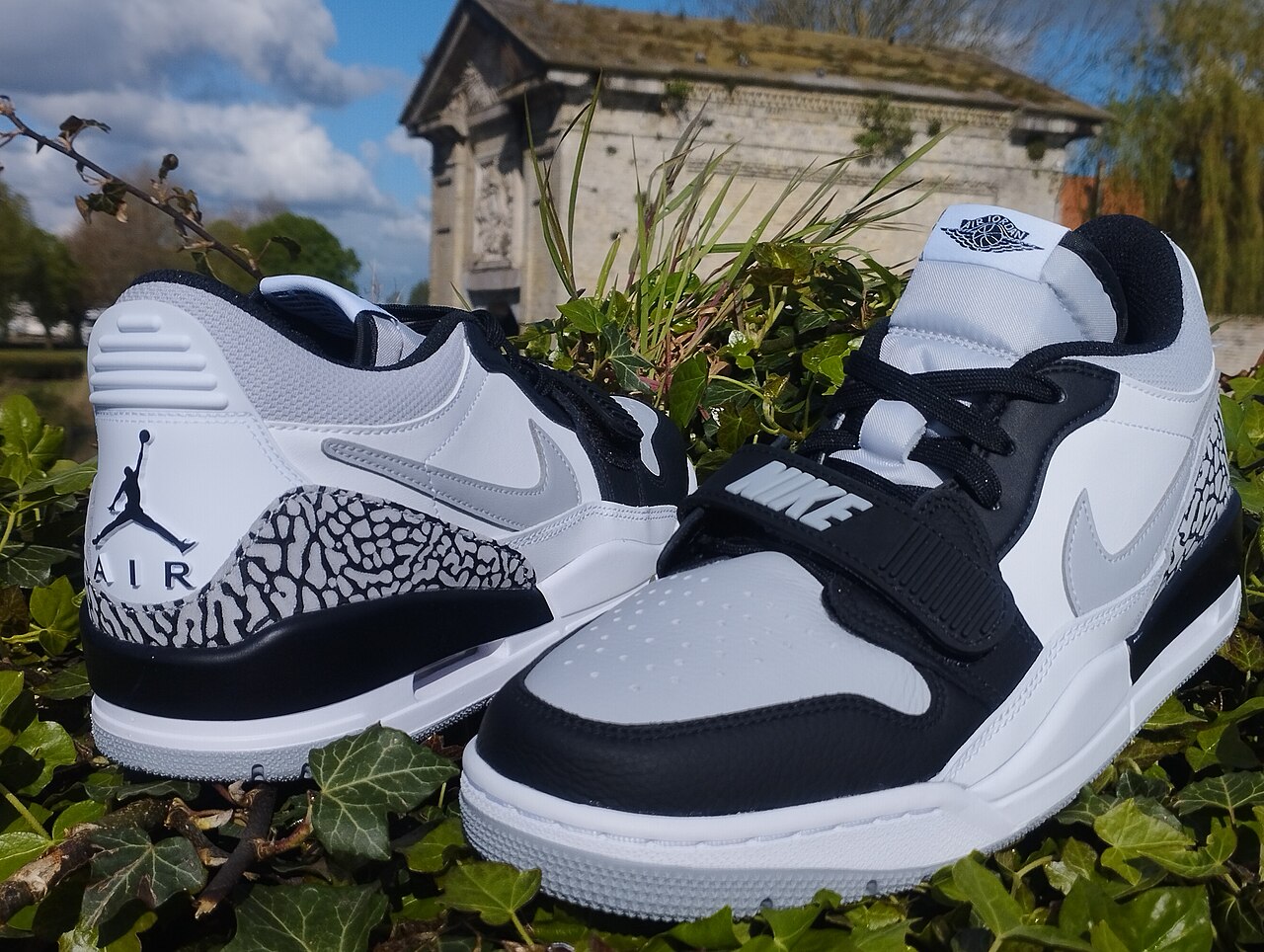

The Jordan Legacy 312 is a useful sneaker to study because it does not hide its references. Don C brought the Air Jordan I, Air Jordan III and Nike Air Alpha Force Low into one silhouette. The model’s name points to Chicago’s area code. The point is not to pretend those pieces were born together; it is to make their relationship feel intentional.
Three shoes, one argument
Nike’s release description identifies the three source models. Each contributes something different: the AJI’s familiar upper language, the AJIII’s sole and elephant-print history, and the Alpha Force’s strap and basketball-era shape. That combination could easily have become a collage. The 312 works as a design argument because the pieces all connect to a story about Michael Jordan, Chicago and what happened when basketball footwear moved into street culture.
Don C’s own history with Chicago gives the project a center of gravity. Nike calls the model loyal to the city he and Jordan Brand share. The 312 name makes that connection explicit, but the more interesting choice is structural: the city’s basketball memory is expressed through product details, not just a flag or a slogan.
What a remix has to prove
A mash-up is easy to describe and difficult to finish. Put three recognizable samples in a beat and listeners may identify every source without feeling a new record. A better remix makes the parts serve one rhythm. The original pieces remain audible, but their relationship changes. The Legacy 312 poses the same challenge in leather, rubber and proportion.
That is why the question “Which shoe did this part come from?” is only the beginning. The more useful question is “Why are these parts together?” If the answer is solely recognition, the novelty wears off. If the answer points to a time, place or point of view, the result can mean something beyond its component list.
Chicago as a creative method
Streetwear often uses geography as shorthand. A city name appears in a collection title while the object could have been designed anywhere. The 312 shows a deeper approach: start with the city’s material history, then decide what to carry forward. For a musician, that might mean tracing drum patterns through local records, filming in spaces that matter to the community, or giving collaborators from that scene a real role in the finished work.
The lesson is not that every project needs to be autobiographical. It is that reference becomes stronger when the maker can explain the connection between parts. Don C did not have to invent a new Jordan silhouette from nothing. He selected and reassembled familiar ones until the combination said something about where he came from.
Look at the parts before the nickname
The strap is a useful place to start because it changes the rhythm of the shoe before anyone reads its name. Nike attributes that element and the eyestays to the Air Alpha Force Low. The midsole, heel, elephant print and outsole point to the Air Jordan III; the upper language points to the Air Jordan I. Seeing those choices in a real pair is more instructive than reducing the Legacy 312 to a three-shoe list. Proportion decides whether those references feel like a new silhouette or three samples pasted on top of one another.
Nike’s description also notes that Jordan briefly wore the Alpha Force Low in 1988. That historical connection makes its inclusion more deliberate than an arbitrary strap chosen for novelty. The 312 is a remix of objects linked by a person, a city and a period in basketball. You can disagree with the finished shape and still appreciate the rigor of the reference.
What an independent designer can borrow
The useful exercise is to collect three objects from your own world and write down what each contributes. One might supply structure, another a material, a third a personal memory. If all three provide only decoration, the combination will probably feel crowded. If each has a different job, the result has a chance to say something new. The same discipline works in beat-making: a drum break, a voice texture and a bass line need distinct roles if the track is going to feel composed rather than assembled.
The 312’s Light Smoke Grey photograph in this story shows a later low-cut colorway, not Don C’s first pair. The AJIII photograph below shows a historical input, not another view of the finished 312. Keeping those visual roles clear is part of the story; the images should help readers identify the design decision, not imply every shoe pictured is the same release.
Source: Nike’s Jordan Legacy 312 release history. The music and remix comparisons are WilderBeatz analysis.