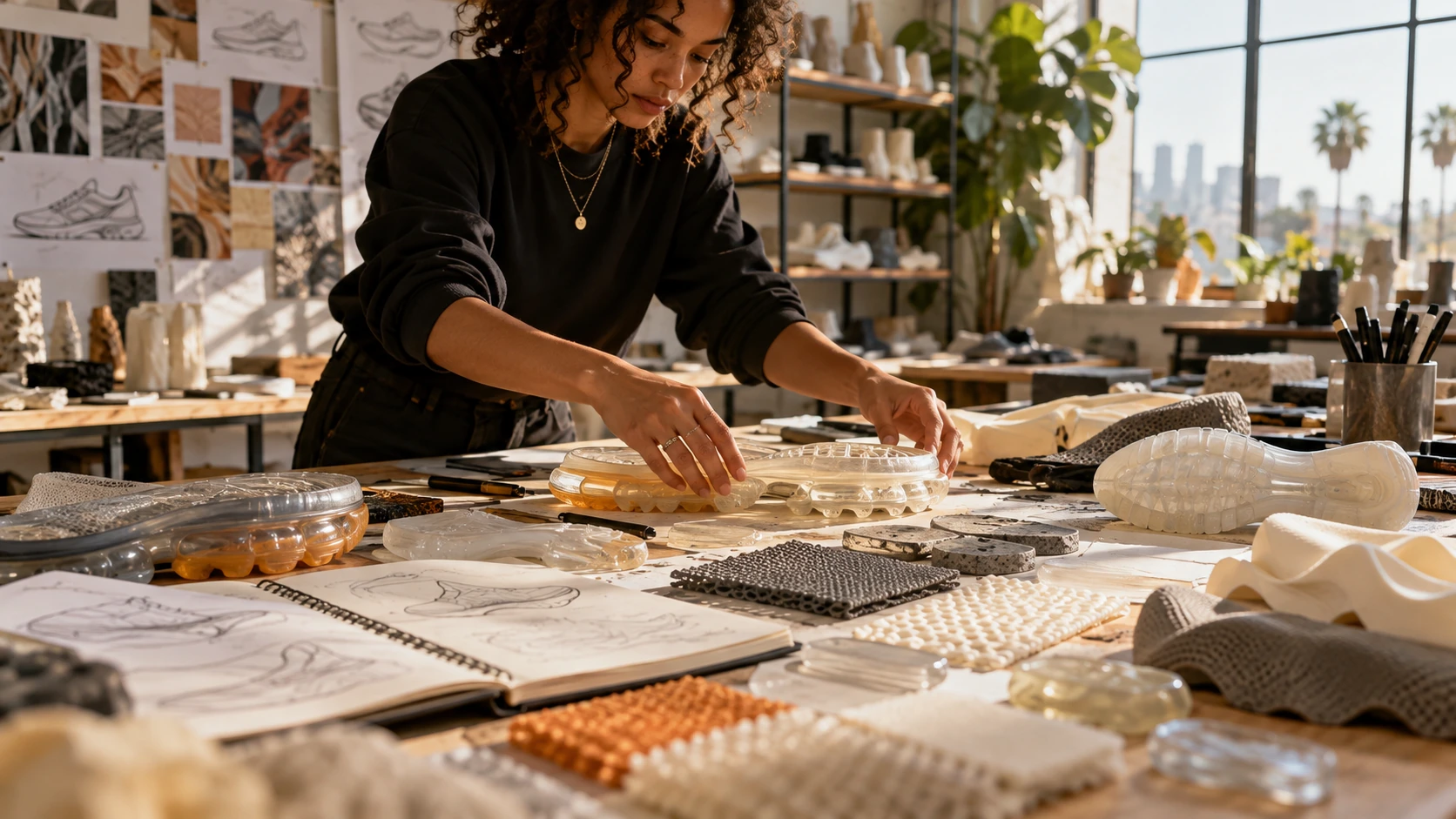
Nike’s Air Works program asks a sharper question than “what color should the next Air Max be?†It gives designers from eight cities a place in the research and creation of new Air Max forms. The announced releases are limited friends-and-family designs, so this is not a conventional shopping guide. It is an opportunity to judge whether a global brand can leave room for a local designer’s actual point of view.
The October design and the moving schedule
Nike’s October update spotlights Los Angeles designer Masyn, who developed an Air Max silhouette with Nike mentors and Zellerfeld. The program began with a cohort drawn from Tokyo, London, Beijing, Los Angeles, Shanghai, Paris, New York City and Mumbai. The schedule has changed since the early announcement: Nike’s current update lists Jose Wong of Shanghai for December and Diya Joukani of Mumbai for March 2027. Earlier Nike material placed Diya in November. Readers should rely on the newer schedule when following the program.
That correction matters. A design program can be covered as culture, but release timing is still a fact. A date copied from an old source quickly turns a useful article into bad shopping information. Air Works’ friends-and-family status also means a reveal should not be mistaken for a broad retail drop.
What “local†should mean in the finished object
A city name on a tag is easy. A meaningful local perspective is harder to manufacture. It might appear in how a shoe deals with movement, weather, surface, scale or the clothes people actually wear around it. It might come from a material or process the designer already uses. The real test is whether a viewer could explain why this designer’s work is different after the logo and campaign copy are removed.
This is where the Air Works format is interesting. The designer enters a large technical system with mentors and production constraints. That access can translate an idea into a more ambitious object; it can also smooth away the sharp decisions that made the idea worth inviting in the first place. Neither outcome can be known from a teaser alone. We need the designer’s notes, clear photographs of the finished pairs, and a comparison with their earlier work.
From one-off experiments to a wider audience
Nike has separately said the Air Max 1000 is planned as a Nike By You offering. That is not the same product as the eight friends-and-family Air Works designs. It raises a useful follow-up question: which ideas from an experimental collaboration can survive when more people are allowed to make choices? Customization can give customers agency, but a menu of colors is not equivalent to a designer reshaping a silhouette.
For an independent maker, the program offers a practical lesson. A collaboration works best when it names what each party contributes. The platform supplies tools, reach and manufacturing knowledge; the guest supplies a method and a reason for the object to exist. If only the guest’s name survives, it was a placement. If the product makes the guest’s thinking visible, it was a collaboration.
Reporting basis: Nike’s October Air Works update and original program announcement. Schedule checked October 19, 2026. Interpretation is WilderBeatz commentary; no finished pair was independently reviewed.