Virgil Abloh’s “The Ten” did more than put quotation marks on sneakers. It made the assembly of a familiar object part of the finished design. You could see foam, displaced labels, stitching and construction decisions that most brands would normally conceal. The result did not ask viewers to forget that a shoe had been made. It asked them to look more closely at how.
A design process people could read
Nike’s account of the project traces Abloh’s early experiments at its Blue Ribbon Studios and the ten-shoe collection that followed. It separates the work into “Revealing,” with cut-open and reconstructed details, and “Ghosting,” where translucent materials expose a different kind of structure. The distinction matters. This was a design system, not one graphic repeated across ten silhouettes. The visible foam and text were ways to direct attention; their exact placement changed with each shoe.
The Air Jordan I already carries a story before a designer touches it. Abloh did not need to erase that history to add his own voice. He moved familiar elements just far enough that the wearer had to notice them again. That is why a reconstructed Swoosh or a label in an unexpected place can feel more powerful than a completely new logo. The audience supplies the memory of the original, and the design starts a conversation with it.
Why this still matters outside sneakers
Music has an equivalent move. A producer can bury every source beneath polish, or leave a texture, breath, sample edge or drum-room imperfection visible enough to tell the listener where the record came from. Neither choice is automatically better. The useful question is whether that detail makes the idea clearer. If an audible sample chop reveals the record’s rhythm, it earns its place. If it is there only to signal “authenticity,” it becomes costume.
The same applies to a music video. A handheld camera can place us inside a room, but shake alone does not create intimacy. A cut that exposes the jump between two performances can strengthen the story when it makes the artist’s energy more immediate. It can also distract if the editor has no reason for it. Abloh’s work is a reminder that a recognizable technique gains meaning from the decision behind it.
The difference between influence and imitation
“The Ten” became so legible that its surface details were easy to copy: the exposed edge, the industrial label, the conspicuous text. That accessibility is part of its achievement and part of the trap it set for followers. Once a visual language turns into a checklist, it stops revealing a process. It only points back to the first person who used it convincingly.
For an independent artist, the better lesson is not to decorate every cover with type or make every garment look unfinished. Find the part of your own process that already carries a story. Maybe it is a neighborhood location in a video, a voice memo that survived into the final beat, or a garment repaired rather than replaced. Put that choice where people can see or hear it. The point is to make your process available, not to reproduce somebody else’s evidence of process.
What to look for now
When the next collaboration arrives, look past the celebrity name and ask what changed in the object. Did the creator bring a method, a memory or a new use to it? Can you explain the change without saying only that it is rare? Those questions separate lasting design from launch-week excitement. “The Ten” remains useful because it gives a way to ask them.
Two groups, two ways to expose a shoe
Nike’s original 2017 announcement identifies two design groups. “Revealing” included the Air Jordan I, Air Max 90, Air Presto, Air VaporMax and Blazer Mid, with cut and reconstructed details that exposed the hand of the maker. “Ghosting” included the Converse Chuck Taylor, Zoom Fly SP, Air Force 1 Low, React Hyperdunk 2017 and Air Max 97, using translucent material to make structure visible in another way. Listing the groups matters because it shows a system of related decisions, not a single trick copied across ten pairs.
Abloh’s background in architecture and engineering also helps explain why construction was treated as visual information. The collection did not need every shoe to look identical. It needed the viewer to recognize an approach: take a familiar object apart, then make the evidence of that intervention legible. The text and exposed foam are memorable, but the deeper idea is editorial. Decide what the audience should notice that it normally overlooks.
A production exercise with the same principle
Take a beat that feels polished but anonymous. Before adding another effect, solo the element that gives it a history: a room sound, an unusual sample attack, a rough keyboard phrase, a breath before a vocal. Bring one of those details slightly forward and listen again. If it directs attention to the song’s idea, keep it. If it merely advertises that the track is “raw,” take it back out. Visible process works only when it clarifies the work.
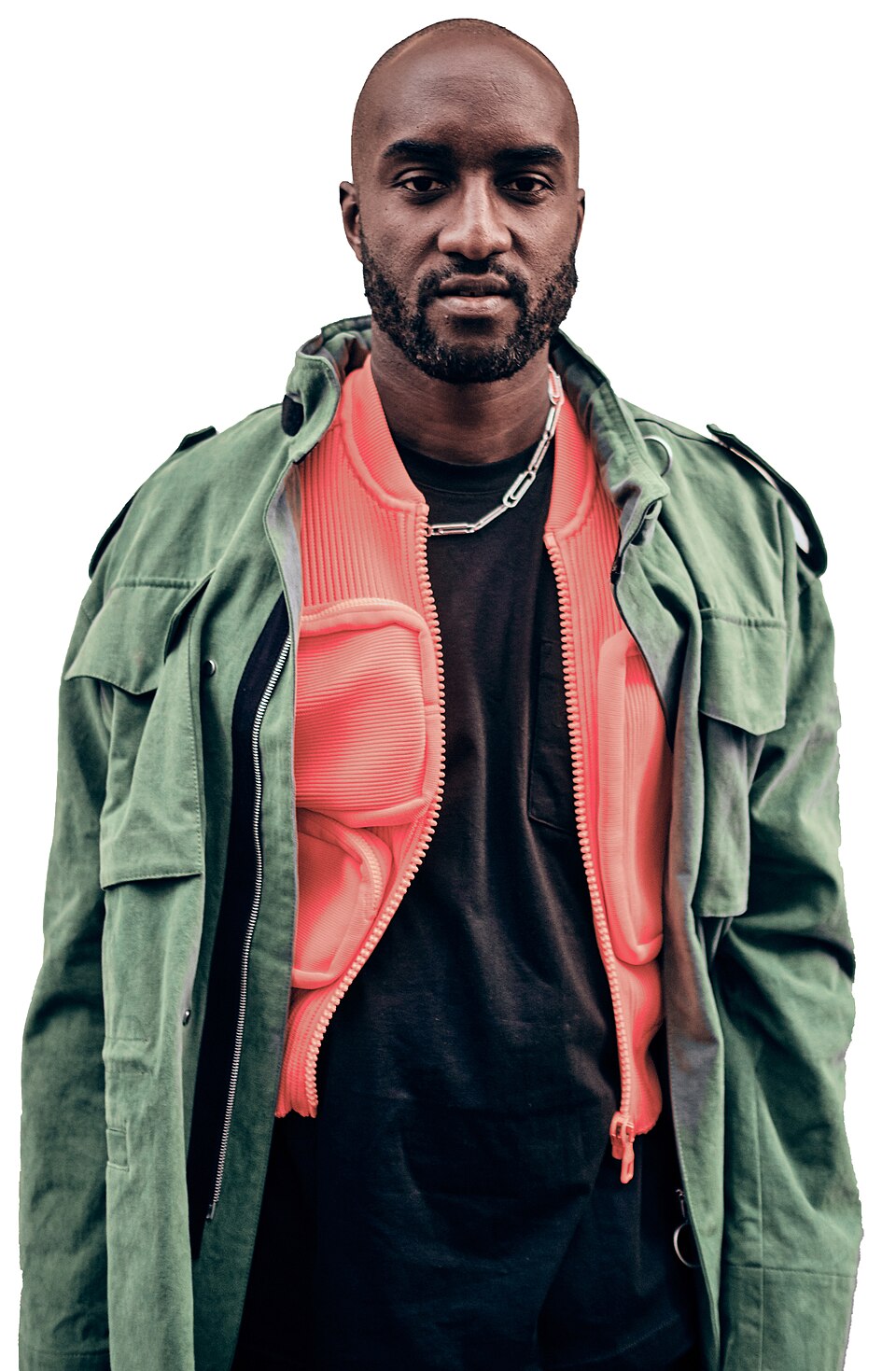
The Fashion Week portrait in this article documents Abloh as a person; it does not depict The Ten. For the shoes themselves, use Nike’s original release archive linked below. That distinction lets the image add human context without pretending to show a product it does not show.
Reporting source: Nike’s history of Virgil Abloh’s “The Ten”. The production and visual-culture comparisons above are WilderBeatz analysis.